
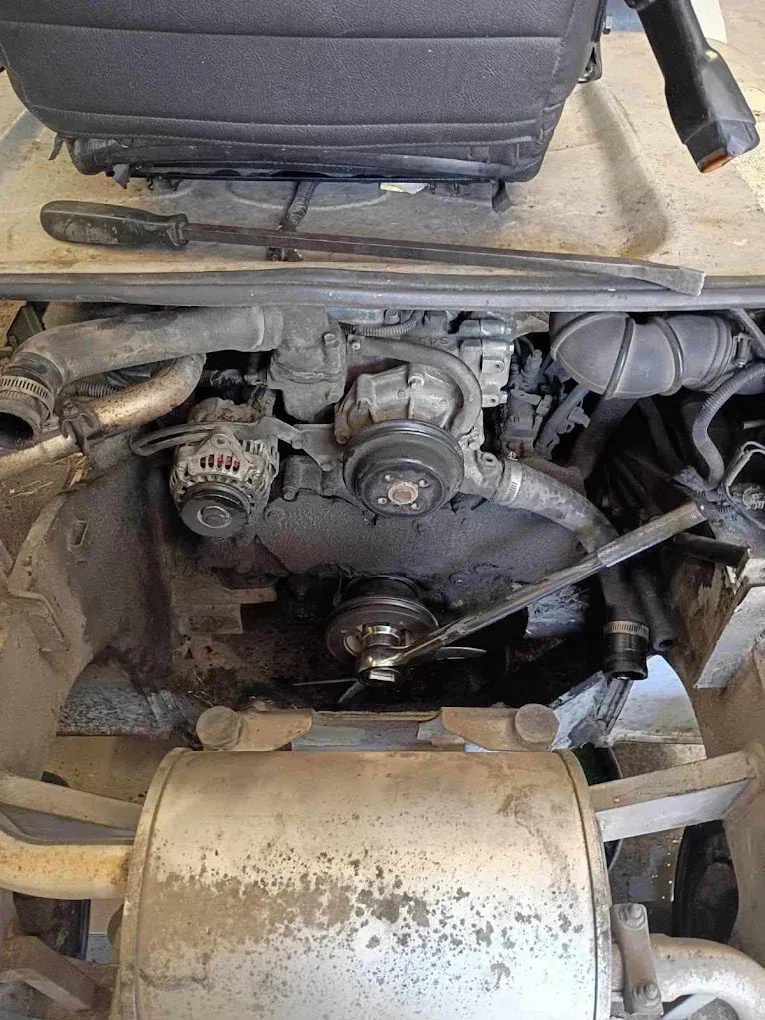
Internal Combustion Forklifts Repaired by Specialists
Propane, Gas, and Diesel Forklift Repair in Putnam for operations relying on LPG, gasoline, or diesel lift trucks with engine, transmission, or hydraulic problems
Propane, gasoline, and diesel forklifts run in some of the most demanding material-handling environments—outdoor yards, loading docks, manufacturing floors, and mixed-use facilities where runtime requirements often exceed what electric equipment can sustain without recharging. Raise It Up LLC is a repair specialist serving operations in Putnam that use internal-combustion lift trucks, addressing engine, transmission, hydraulic, and lifting system problems across LPG, gas, and diesel-powered equipment. This is a repair operation, not an equipment dealer—the focus is on restoring machines that are already working in your facility.
Internal-combustion forklifts present a diagnostic picture that combines engine-specific problems with the hydraulic and mechanical systems shared across all forklift types. A propane-powered forklift that runs rough, hesitates under load, or produces black exhaust has a different diagnostic path than the same symptom on a diesel unit where fuel injection system condition, glow plug function, and turbo performance all become relevant variables. Gasoline-powered equipment brings its own carburetor, ignition, and fuel delivery considerations. Misdiagnosing across those fuel systems wastes time and parts, which is why trained technical experience with each power type matters before work begins. Hydraulic and lifting system failures—slow mast travel, inconsistent tilt, weak lift capacity—are evaluated separately but often occur alongside engine-related performance issues on high-hour machines.
Describe the symptoms your equipment is showing and arrange a diagnostic visit by calling (860) 576-4604.
How Internal Combustion Forklift Repair Is Done Correctly
Diagnosis on internal-combustion forklifts starts with a combination of operational observation and system-specific testing. Engine fault codes, where the equipment supports them, provide a starting reference—but older propane and gasoline forklifts common in smaller operations often lack electronic diagnostics, requiring fuel pressure testing, compression checks, and ignition timing verification to isolate the cause. Hydraulic system diagnosis runs parallel, including pressure testing at the pump, evaluating control valve function, and checking cylinder seals for bypass that reduces lifting force without triggering an obvious warning sign.
After repair, the change is measurable in how the machine behaves under working conditions. An engine that was misfiring under load runs smoothly through a full lift cycle. A hydraulic system that lifted slowly or stopped short of full mast height reaches its correct travel with consistent pressure. Raise It Up LLC conducts post-repair operational checks under load conditions rather than confirming repair only at idle, because that is where the original problem was occurring.
On-site diagnostics are the starting point when practical, given that moving a non-functional internal-combustion forklift requires transport equipment and adds time before any diagnostic work begins. Repairs that require engine removal, transmission disassembly, or cylinder rebuilding are completed in a shop environment with the appropriate tooling. The division between on-site and shop work is communicated clearly once the diagnosis is confirmed, so facilities in Putnam can plan around the repair timeline without uncertainty about what the scope involves.
Questions About Internal Combustion Forklift Service
Operators running propane, gas, or diesel forklifts often have specific questions about what different problems indicate and how the repair process is structured. The following addresses common concerns from facilities in Putnam and the surrounding region.
What causes a propane forklift to lose power progressively during a shift rather than failing suddenly?
Progressive power loss on LPG equipment is frequently related to regulator wear or a vaporizer that is not converting liquid propane to vapor efficiently under sustained demand—the problem worsens as the tank empties and supply pressure drops.
How does a technician distinguish between an engine problem and a hydraulic problem when a forklift lifts weakly?
Lift capacity issues are isolated by testing hydraulic pump output pressure against the specification for that model—if pump pressure is correct and lift is still weak, the issue shifts to the control valve or cylinder seals rather than the engine side of the system.
Why do diesel forklifts used in Putnam's colder months sometimes have difficulty starting even with good fuel?
Cold-temperature starting on diesel equipment depends heavily on glow plug condition and the fuel's cold-flow rating—diesel blended for warmer seasons gels at lower temperatures, and glow plugs that test functional at ambient temperature may not deliver sufficient preheat when the ambient drops significantly overnight.
What maintenance intervals apply to internal-combustion forklifts operating in high-duty-cycle environments?
Engine oil and filter changes, spark plug or glow plug inspection, fuel filter replacement, and hydraulic fluid evaluation are all interval-based services—high-hour operations typically reach those intervals faster than calendar-based schedules suggest, meaning hour-meter tracking is more reliable than date-based planning.
How do I know whether a repair is better handled on-site or requires the machine to go to a shop?
The determining factor is whether the required repair can be completed safely and correctly with portable tools in the facility's environment—engine-out repairs, transmission work, and cylinder rebuilding require shop equipment that cannot be brought to the site, and a clear diagnosis is what drives that decision.
Raise It Up LLC brings technical repair experience to internal-combustion forklifts across the full range of LPG, gasoline, and diesel equipment—call (860) 576-4604 to schedule a diagnostic visit for equipment that is not performing as it should.