Tires That Keep Forklifts Moving Safely
Forklift Tire Replacement in Putnam for operations with excessive wear, surface cracking, or handling instability
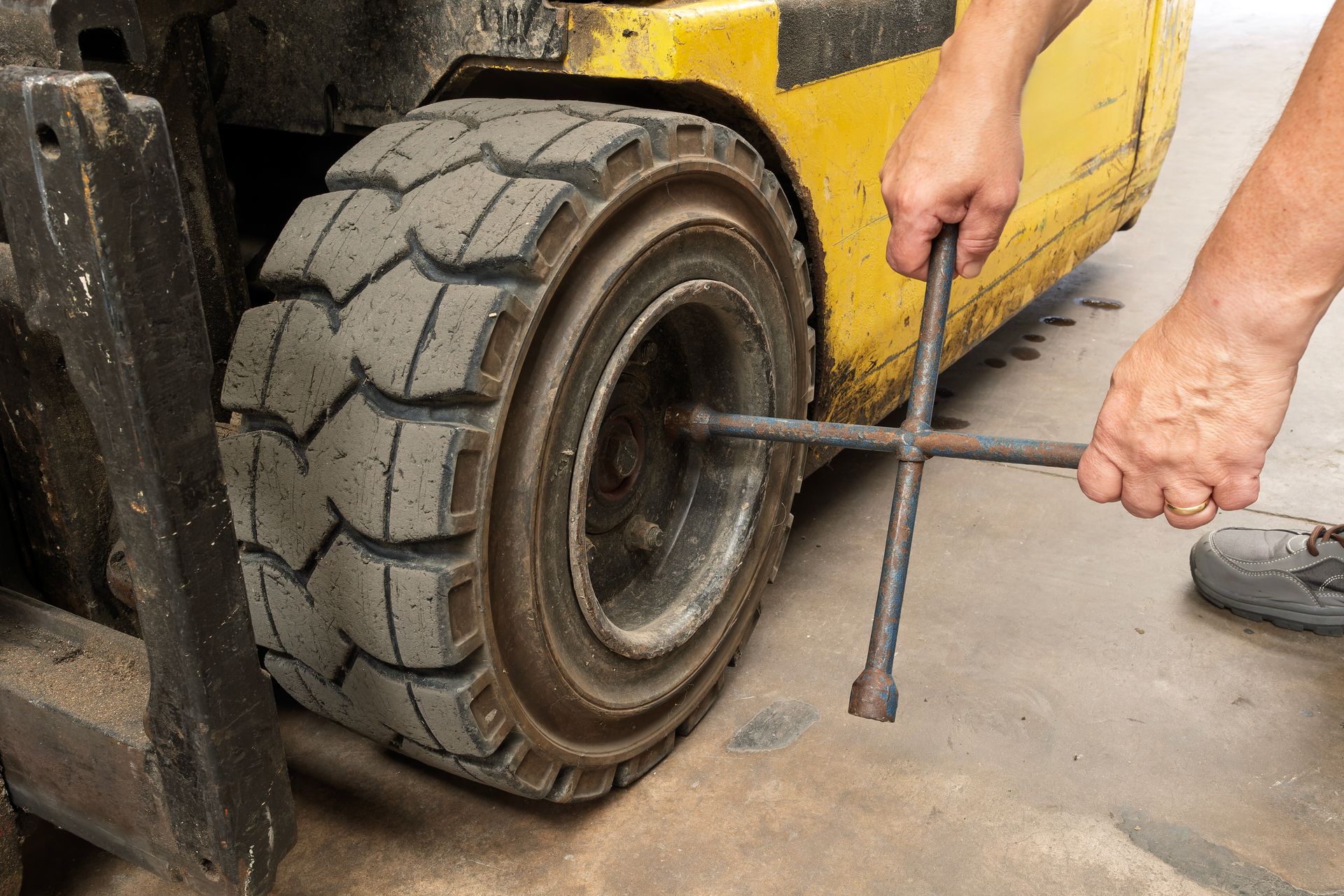
Raise It Up LLC provides forklift tire replacement as a focused, dedicated service for warehouses, manufacturers, and commercial operations in Putnam. Worn tires are frequently overlooked until they create an obvious problem—flat spotting, sidewall chunking, or visible tread compression that interferes with load stability. Addressing tire condition before those symptoms become operationally disruptive is the core purpose of this service.
Forklift tires carry load in fundamentally different ways than vehicle tires. Solid press-on tires, pneumatic tires, and cushion tires each wear according to the floor surface, load weight, and operating cycle they absorb. On concrete warehouse floors common in this region, flat spotting develops when a forklift sits stationary under load for extended periods, creating uneven contact patches that produce vibration and reduce steering accuracy. Tire condition directly affects how precisely an operator can place a load, how much shock transmits through the mast during movement, and how reliably the machine handles turns at operating weight.
Arrange a tire inspection to assess current wear patterns and identify which units in your operation need attention before downtime interrupts a shift.
What Tire Condition Actually Affects on the Floor
Tire replacement begins with a wear assessment that goes beyond simply measuring tread depth. The 50 percent wear line marked on most solid forklift tires indicates the point at which the load-bearing compound has compressed enough to affect stability—not just traction. A tire that appears usable from the side may already be operating past that threshold, transferring additional stress to the mast, axle, and operator platform on every load cycle.
Once replacement tires are pressed or mounted correctly, operators notice an immediate reduction in vibration during travel and more predictable steering response during turns. Load placement becomes more controlled because the machine rides level rather than compensating for uneven contact. Forklifts that previously felt sluggish or rough during loaded travel typically return to the handling characteristics they had when the tires were new.
The correct tire specification matters as much as the replacement itself. Substituting a tire compound rated for smooth indoor concrete onto a machine operating on outdoor asphalt or dock plates accelerates wear and can affect load ratings. Raise It Up LLC matches tire type and rating to the operating environment rather than defaulting to the lowest-cost available option.
Common Questions About Forklift Tire Replacement
Operations in Putnam and the surrounding area often have questions about when tires need replacement and what that process involves. The answers below address the most common concerns.
What is the wear indicator on a solid forklift tire and how does it work?
Most solid press-on tires have a groove or molded line at the 50 percent compound depth—when the tire wears to that line, the load-bearing capacity and ride characteristics are compromised enough to warrant replacement regardless of how the surface looks.
How do I know if my forklift needs tire replacement rather than a different repair?
Flat spots, chunking along the sidewall, operator reports of increased vibration, or visible compression beyond the wear line are all indicators that tires are the primary issue rather than a mast or axle problem.
When is the right time to schedule tire replacement for a working fleet?
Scheduling during a planned shift change or low-volume period avoids pulling a unit during peak loading hours—tire pressing on solid cushion tires typically takes the machine out of service for part of a workday.
Why do some forklifts in Putnam warehouses wear tires faster than others in the same facility?
Floor surface transitions—moving between smooth warehouse concrete and rougher dock areas or outdoor asphalt—accelerate compound wear unevenly, which is why tires on units assigned to dock duty often need replacement before others in the same fleet.
What happens if a forklift continues operating on worn tires past the wear line?
Operating past the wear indicator increases load instability, reduces steering precision, and transmits greater shock through the mast on each travel cycle, which can accelerate wear on other mechanical components over time.
Raise It Up LLC schedules tire replacement for individual units or multiple machines at once, making it practical for facilities to address an entire fleet's tire condition in an organized way—call (860) 576-4604 to discuss which units in your operation are due for inspection.