
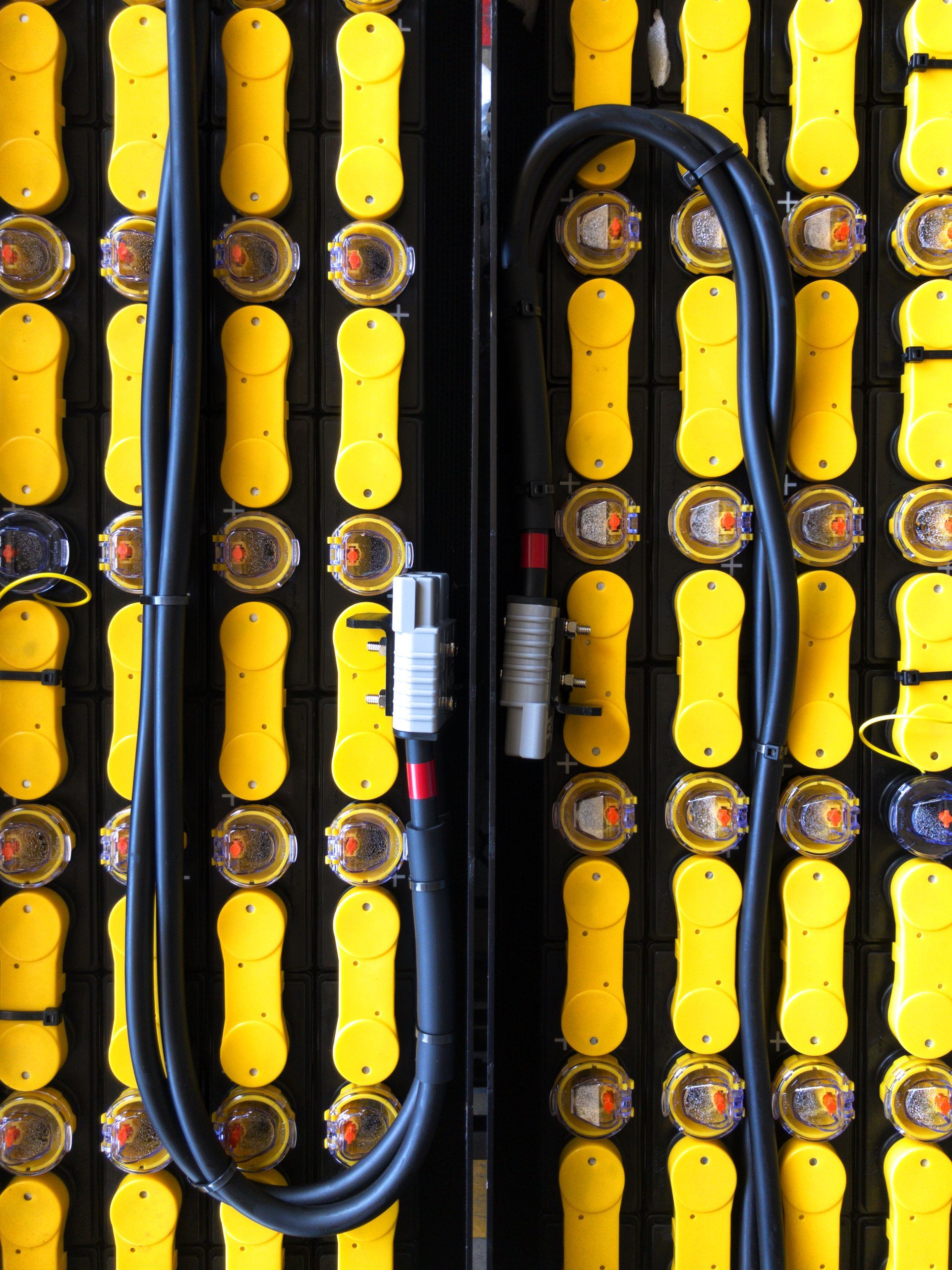
Electric Forklifts Need Accurate Battery Diagnosis
Forklift Battery and Charger Service in Putnam for electric equipment showing charging failures, weak power output, or intermittent operation during shifts
A forklift that won't hold a charge through a full shift, loses power under load, or fails to accept a charge at all doesn't automatically need a new battery—but determining whether repair or replacement is the right answer requires working through the electrical system methodically. Raise It Up LLC provides battery and charger service for electric forklift operators in Putnam, focusing on accurate diagnosis before any replacement recommendation is made. The cost difference between a corrected charging fault and a full battery replacement is substantial, and that difference should be based on confirmed findings, not assumptions.
Symptoms that point toward battery or charger problems include a forklift that powers down before the shift ends, sluggish hydraulic and drive response that doesn't match the state of charge displayed, a charger that cycles off early or never reaches a full charge indication, and connections that run warm or show visible corrosion. Each symptom implicates a different part of the system—the battery cells themselves, the charger output, the cabling between charger and battery, or the connectors and terminal hardware—and each requires a specific diagnostic approach to isolate.
Schedule a battery and charger evaluation to identify exactly where the electrical fault is occurring before committing to a replacement decision.
What Battery Service Actually Involves
Battery diagnosis for industrial electric forklifts involves load testing individual cells rather than evaluating the pack by voltage alone—a battery that shows acceptable resting voltage can still fail under the amp draw of actual lift and drive operations if individual cells have degraded unevenly. Charger output is tested against its rated amperage profile to determine whether it's delivering a full charge cycle or cutting off early due to a component fault. Connection hardware including cables, lugs, and inter-cell connectors is inspected for resistance buildup, because high resistance at a connection point causes heat, voltage drop, and premature battery discharge even when the battery and charger are both functioning correctly.
After the service is completed, the observable difference is a forklift that runs through its intended shift duration without power loss, charges fully between shifts, and responds to hydraulic and drive inputs with the force and speed the equipment is rated to deliver. Connections that were running hot become cool at the same operating loads, which also reduces the risk of insulation damage to cables over time.
Raise It Up LLC provides practical guidance on whether a battery can be repaired, whether a charger replacement is more cost-effective than repair, and how watering intervals and charging habits affect battery longevity—details that help operators extend service life rather than replacing equipment prematurely. Putnam's winter temperatures also reduce available battery capacity, so a pack that performs adequately in summer may fall short of a full shift in January without any change in its actual condition.
Answers to Frequent Battery Service Questions
These questions come up consistently among electric forklift operators evaluating battery and charger service for their equipment.
How is a forklift battery tested to determine whether it needs repair or replacement?
Load testing applies a controlled current draw to the battery and measures how individual cells respond, revealing capacity loss and cell imbalance that voltage readings alone won't show.
What causes a charger to stop delivering a full charge cycle?
Charger faults commonly involve failed rectifier components, damaged control boards, or blocked cooling that causes the unit to thermal-cut before the charge cycle completes—all of which are repairable without replacing the entire unit.
Why do battery connections cause performance problems even when the battery is healthy?
Corroded or loose connections create electrical resistance that limits current flow, generates heat, and mimics the symptoms of a failing battery—making connection inspection a required step before any cell-level testing.
When should watering schedules be adjusted for flooded lead-acid forklift batteries?
Watering frequency should increase during periods of heavy use or warm weather, and batteries in Putnam operations that run extended shifts during peak seasons typically need more frequent watering than the same equipment does during slower winter periods.
How does cold weather affect electric forklift battery performance?
Lead-acid batteries lose a measurable percentage of their available capacity below 40 degrees Fahrenheit, which means a battery pack that handles a full shift in summer may only deliver 70 to 80 percent of that capacity on a cold winter morning in northeastern Connecticut.
Raise It Up LLC can evaluate your electric forklift's battery, charger, and connections on-site—call (860) 576-4604 to describe the symptoms and arrange a service visit that includes a written diagnosis before any repair or replacement work proceeds.