
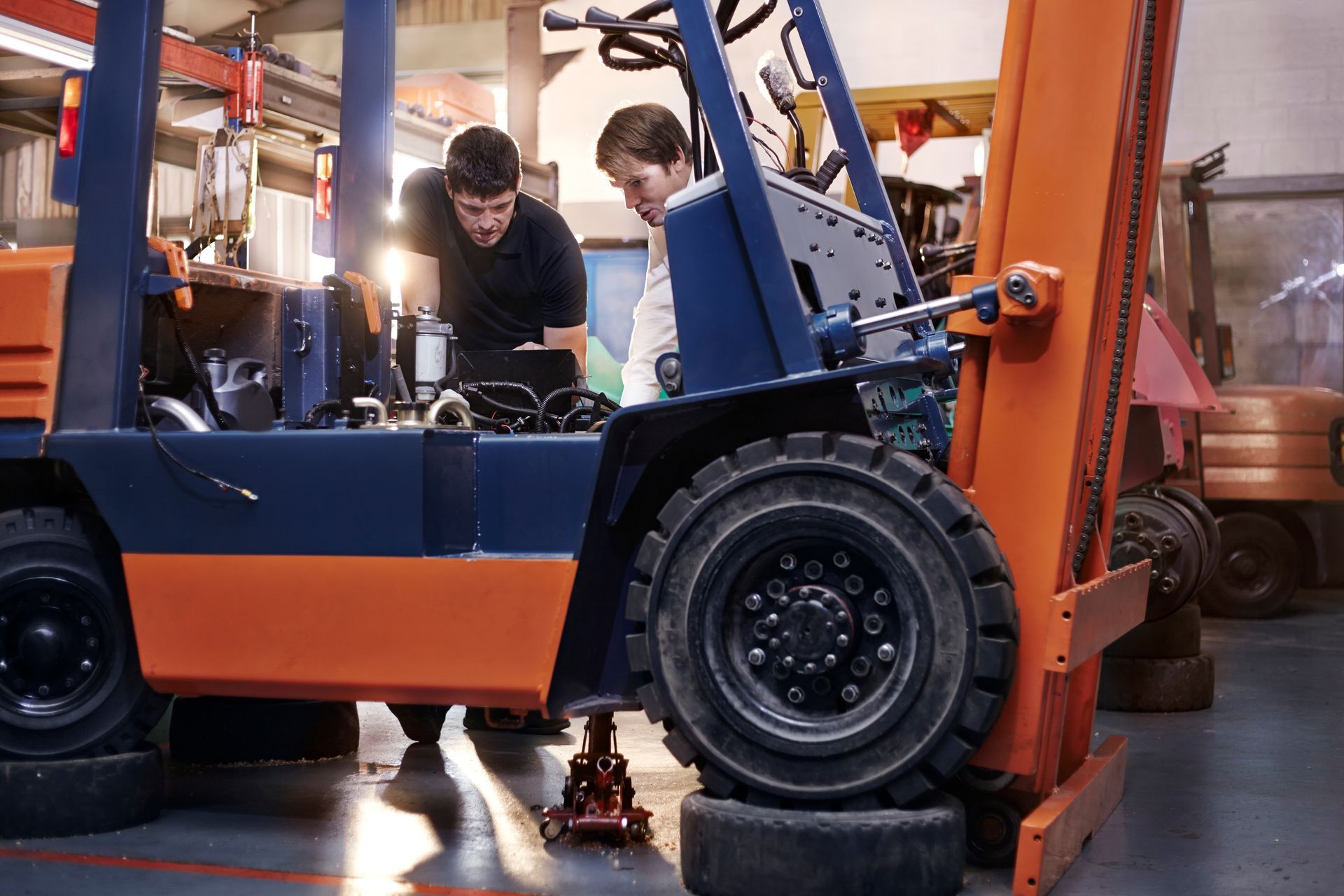
Rapid Response When Equipment Stops Working
Emergency Forklift Repair in Putnam for loading, production, and warehouse operations facing unexpected equipment failure
A forklift that stops working during a receiving window, a production run, or an active shipping cycle creates a situation where every hour of downtime carries a measurable cost. Raise It Up LLC provides emergency forklift repair for commercial and industrial operators in Putnam and the surrounding area, focused on on-site diagnosis and repair that restores equipment without the delays that come from transporting a non-functional machine to an off-site facility. The approach centers on arriving prepared, communicating clearly about what is found, and completing repairs to a confirmed standard rather than a temporary workaround.
The nature of an emergency repair call changes how the diagnostic process is structured. Rather than working through a full scheduled inspection, the focus narrows to identifying the specific failure that stopped the machine and determining what is needed to restore safe operation. That narrower focus requires accurate fault identification from the beginning—misreading a symptom and replacing a component that is not the cause adds time and cost without restoring function. Common emergency failure points include hydraulic system failures that prevent lifting, drivetrain problems that stop travel, electrical faults that shut the machine down mid-operation, and fuel system issues on internal-combustion equipment. Each requires a different diagnostic path, and arriving on-site with the right tools and a realistic parts inventory for the likely cause reduces the time between arrival and repair completion.
Call (860) 576-4604 to report the failure and describe what the machine is doing so the right preparation happens before the technician arrives.
What Proper Emergency Repair Requires
Effective emergency repair depends on honest assessment of what can be completed on-site versus what requires a shop repair. A hydraulic cylinder that has failed completely, for example, may need a replacement unit that is not immediately available, while a blown fuse, failed relay, or disconnected hydraulic hose can be addressed in the field within a fraction of the time. Communicating that distinction clearly—and providing a realistic repair plan for the portion that cannot be completed immediately—is part of what makes emergency service useful rather than frustrating.
Once the repair is complete, the observable change is straightforward: the machine operates under load, travels without interruption, and performs the function it was doing before the failure. Raise It Up LLC confirms operation before closing the service call rather than leaving the site based on an assumption that the repair held. In facilities where the repaired unit needs to re-enter service immediately, that confirmation step is the difference between a resolved problem and one that resurfaces during the next loaded cycle.
Emergency repair visits cover the immediate failure, but they also produce information about the machine's broader condition that is worth acting on. A hydraulic hose that failed due to age and pressure fatigue in one location may have similar hoses elsewhere on the same machine approaching the same condition. Noting those findings and communicating them as a follow-up service recommendation—without inflating the immediate repair scope—is how emergency service connects to longer-term equipment reliability.
Questions Before Calling for Emergency Service
Operators across Putnam dealing with an unexpected forklift failure often have immediate questions about the process and what to expect. The following covers the most common concerns when equipment goes down without warning.
What information should I have ready when calling for emergency forklift repair?
The make, model, and power type of the machine, along with a description of what it was doing when it failed and any fault codes or warning lights that appeared, helps prepare the technician with the most likely diagnostic approach before arriving on-site.
How does on-site repair differ from transporting the machine to a shop for emergency work?
On-site repair eliminates the time and logistical cost of moving a non-functional machine, which often requires a flatbed and a second piece of equipment to load it—for many failures, the on-site approach restores operation faster and with less disruption to surrounding work.
Why does accurate symptom description matter when reporting a forklift failure?
A technician who arrives knowing the machine cuts out under load rather than refusing to start entirely can prioritize the correct diagnostic tools and bring the most likely replacement components, reducing the time spent on-site before the repair is complete.
What happens if the required part for an emergency repair is not immediately available?
The technician documents the confirmed diagnosis, communicates the parts lead time clearly, and in some cases can identify a temporary operational adjustment that allows limited safe use while the part is sourced—that decision depends on the nature of the failure and the safety implications of the workaround.
When does a Putnam facility need shop repair rather than on-site emergency service?
Repairs requiring heavy press equipment, cylinder rebuilding, transmission disassembly, or specialized tooling that cannot be transported to the site are handled in the shop—the decision is based on what the confirmed diagnosis requires, not a default preference.
When a forklift stops working and production cannot wait, Raise It Up LLC is the call to make—contact (860) 576-4604 with the machine details and a description of what happened to start the process of getting equipment back in service.