
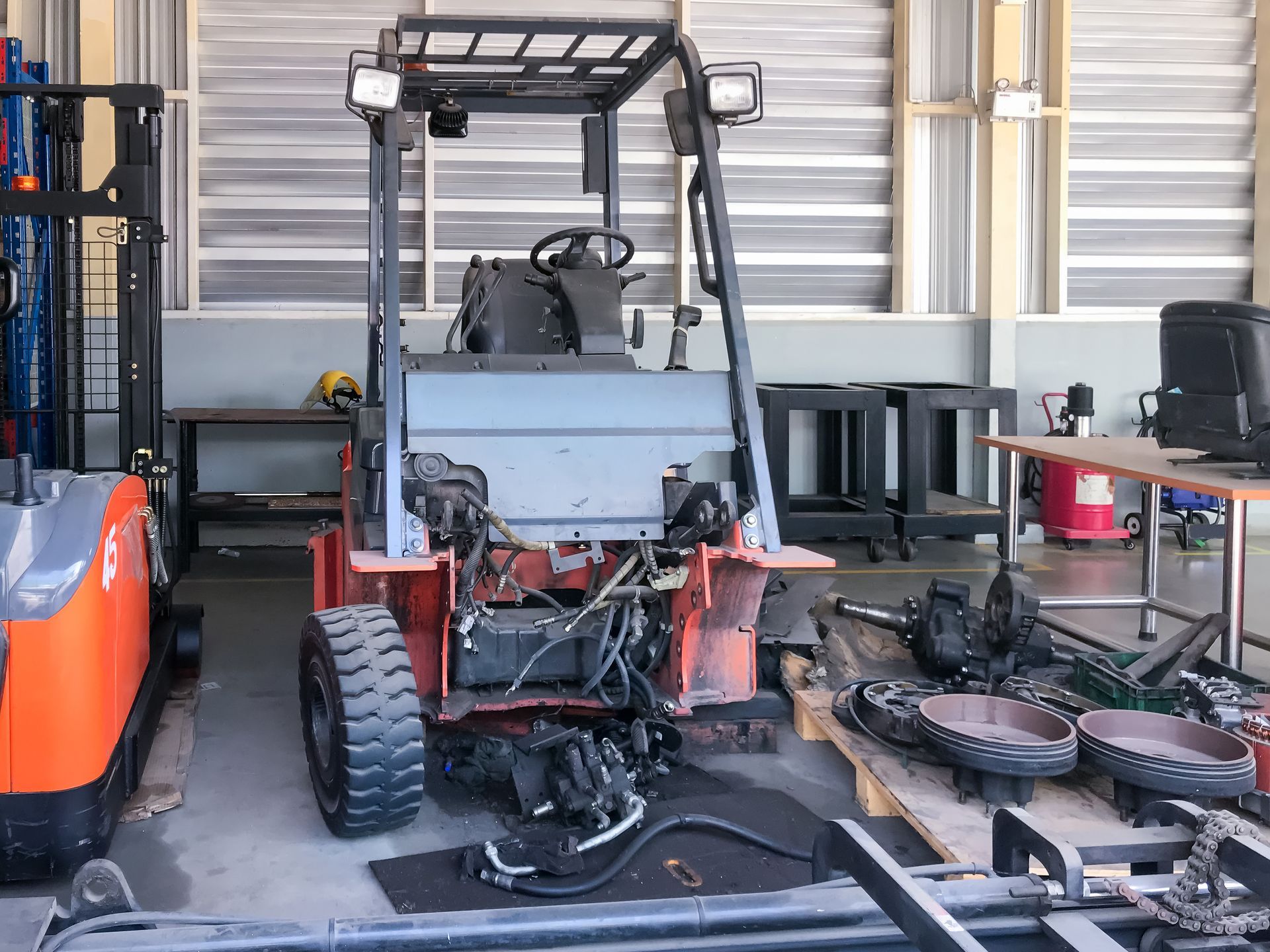
Electrical and Mechanical Diagnosis Done Accurately
Electric Forklift Repair in Putnam for facilities experiencing power loss, charging failures, or inconsistent lift performance
An electric forklift that loses power mid-shift, refuses to charge fully, or produces intermittent lifting behavior creates operational problems that are difficult to work around. Raise It Up LLC provides repair service focused specifically on electric material-handling equipment for facilities in Putnam that depend on these machines to move product reliably. The electrical, battery, charging, hydraulic, and mechanical systems in an electric forklift are interconnected in ways that make accurate diagnosis a prerequisite for an effective repair—replacing components without confirming the root cause typically results in the same symptom returning.
Electric forklift faults often appear at the point where two systems meet. A battery that tests acceptable under static load may drop voltage sharply under the draw of a loaded lift cycle, causing the controller to interpret the condition as a fault and cut power to the traction or hydraulic circuit. That behavior looks like a controller problem from the operator's perspective, but the actual cause is at the battery. Similarly, a charging system that accepts a connection and runs through a charge cycle without flagging an error may still be undercharging cells if the charger output voltage is not calibrated to the battery pack's current condition. Accurate diagnosis requires reading fault codes, load-testing the battery under operational draw, verifying charger output at the correct voltage, and tracing hydraulic performance against manufacturer specifications for that model.
Submit a repair request to describe the symptoms your equipment is showing so the right diagnostic approach is prepared before the service visit.
Why Electric Forklift Faults Require Systematic Troubleshooting
On-site diagnosis is the starting point for electric forklift repair wherever the machine can be safely evaluated in its operating environment. Fault code retrieval from the onboard controller provides a starting reference, but codes identify where the system detected a problem—not necessarily where the problem originates. The diagnostic process works through each contributing system, eliminating causes systematically rather than swapping components based on the most common assumption for that symptom code.
After repair, the operational changes are specific and testable. A unit that previously cut out under load sustains power through a full lift cycle. A machine that would not complete a charge cycle reaches full state-of-charge within the expected window. Hydraulic response that felt sluggish or inconsistent returns to the pressure and speed the system was designed to produce. These are measurable conditions, not subjective impressions—and confirming them before the technician leaves the site is part of what separates a complete repair from a temporary fix.
Raise It Up LLC handles electric forklift repair with the understanding that some work is completed on-site while other repairs—particularly those requiring press work, component rebuilding, or extended electrical tracing—are better completed in a shop environment. The decision between on-site and shop repair is based on the scope of the confirmed diagnosis, not a default preference, and is communicated to the facility before work begins.
Answers to Frequent Electric Forklift Questions
Electric forklift problems often raise questions about what is actually failing and how the repair process works. The questions below reflect what facilities in Putnam and the surrounding area ask most often when electric equipment is not performing correctly.
What causes an electric forklift to lose power suddenly during a load cycle?
Voltage drop under load is the most common cause—the battery may appear sufficiently charged at rest but cannot sustain the amperage draw required by the traction and hydraulic motors simultaneously, triggering a controller protection shutdown.
How does a technician determine whether the battery or the charger is causing a charging problem?
Load testing the battery at operational draw separates battery capacity from charger output issues—a charger that runs its full cycle without error can still under-deliver if its output voltage is not matched to the battery pack's current state.
Why does intermittent operation on an electric forklift make diagnosis more difficult?
Intermittent faults are often connection-related—corroded battery terminals, loose controller connections, or a failing contactor that functions correctly when cold but degrades as operating temperature rises—and reproducing the fault under controlled conditions is necessary to confirm the source.
When should a Putnam facility consider replacing a battery versus repairing the forklift's charging system?
Battery replacement becomes the more practical path when cell testing shows capacity below approximately 80 percent of the original rating—at that point, even a fully functional charger cannot restore the runtime the operation requires.
What maintenance practice extends the service life of an electric forklift battery in warehouse conditions?
Avoiding deep discharge cycles—running the battery below 20 percent state-of-charge regularly—accelerates cell degradation, so establishing a charging discipline tied to shift changes rather than waiting for a low-battery indicator significantly extends pack life.
Raise It Up LLC is available to evaluate electric forklift problems across Putnam and the surrounding area—call (860) 576-4604 to describe the symptoms and arrange a diagnostic visit.